• Skip to main content
  • Skip to footer
B-AI Semplice
  • Our solution
    • Overview
    • Artificial intelligence
  • Operational areas
    • Logistitcs
    • Transports
  • Pricing
  • Blog
  • About Us
  • Book a Demo
  • English
    • English
    • Italiano

Elisabetta Villa

The problem isn’t BI. It’s where you start.

October 27, 2025 by Elisabetta Villa

When a company decides to adopt Business Intelligence software, expectations are high—but projects often struggle to take off.
The reason isn’t the technology. It’s the starting point.

Many BI tools are empty shells. Powerful, yes—but empty. Faced with a blank dashboard to fill from scratch, even well-structured companies get stuck.
No one knows where to begin, which KPIs to choose, or which data to activate first.

You need a consultant, an IT team, weeks of integration. And so, the project drags on, slows down—or worse, stops altogether.

B-AI Semplice was created precisely to overcome this block.
It’s the first ready-to-use vertical Business Intelligence platform designed for logistics.
No blank sheets. No development from scratch.
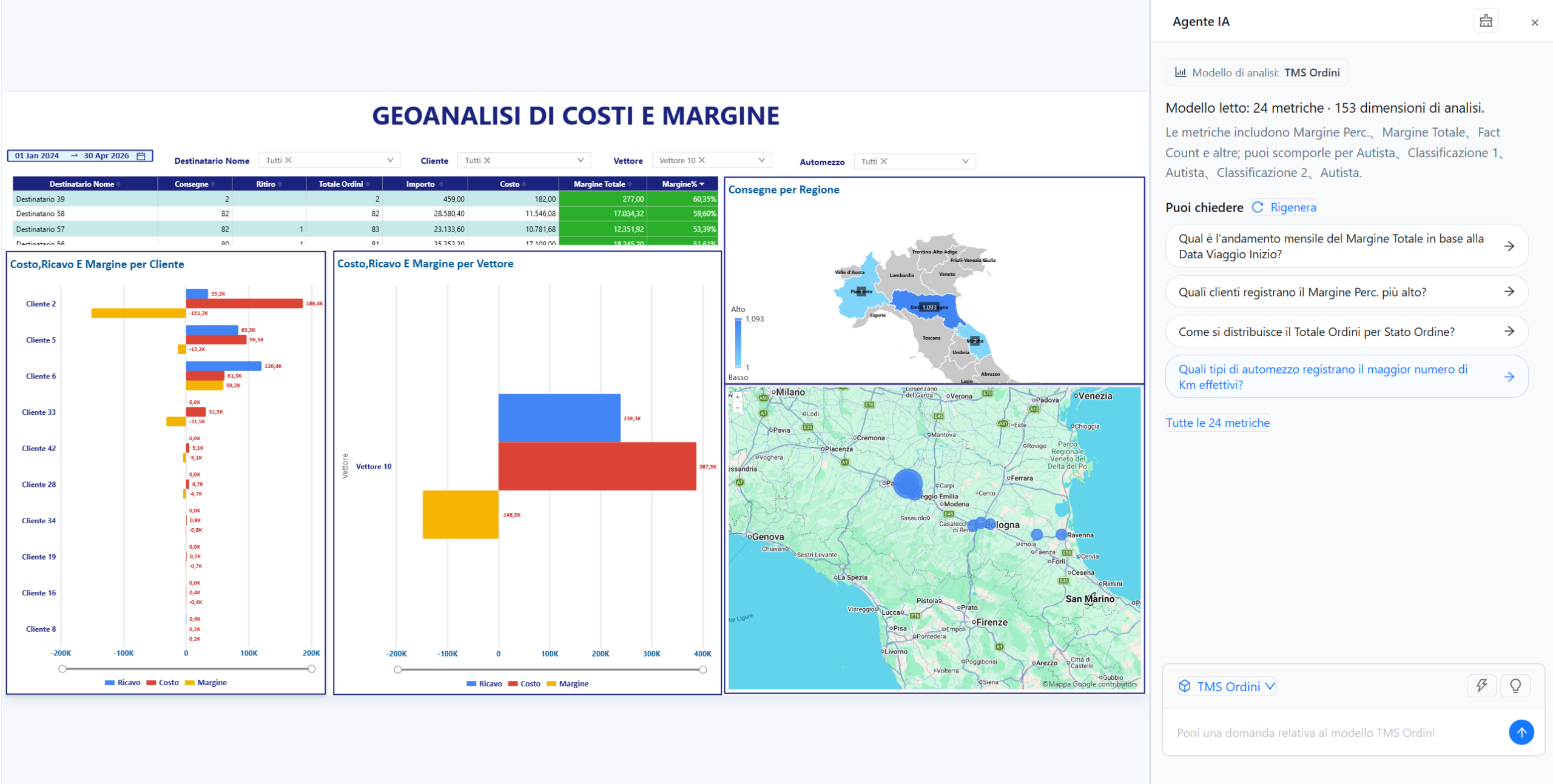
Preconfigured dashboards, field-tested KPIs, and integrated artificial intelligence that lets you ask questions in natural language and get clear, visual, and immediately actionable answers.

You can ask:

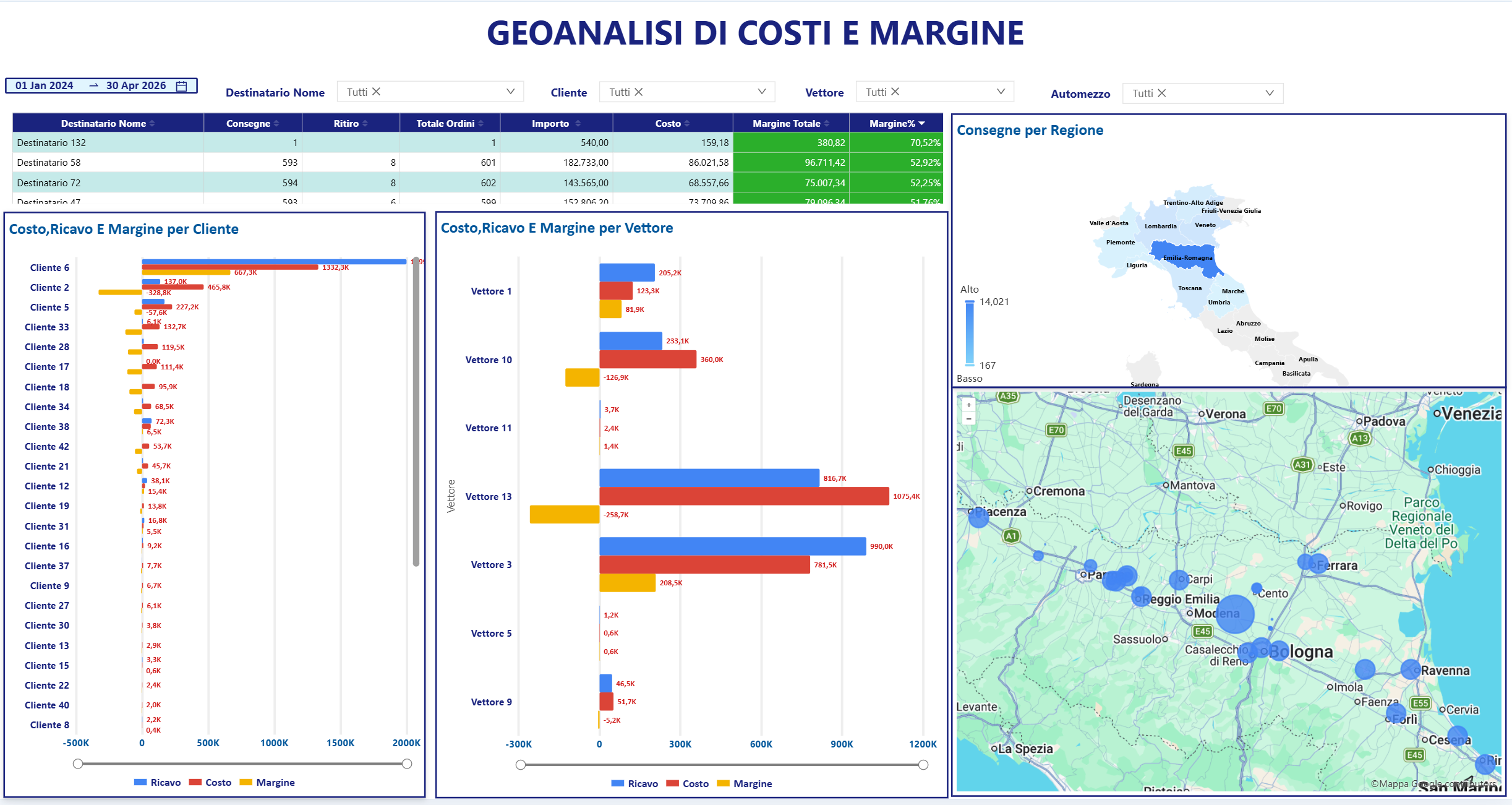
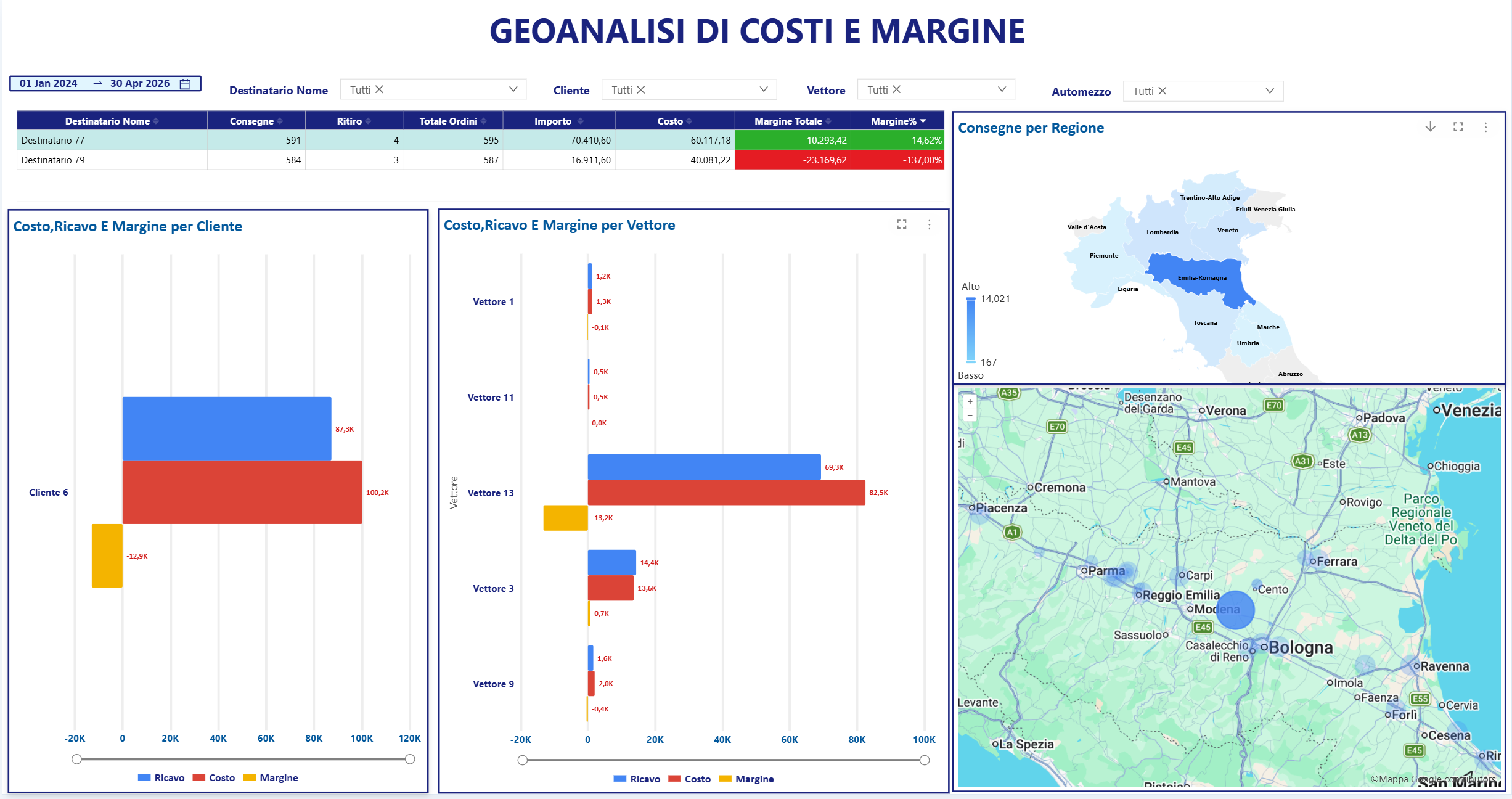
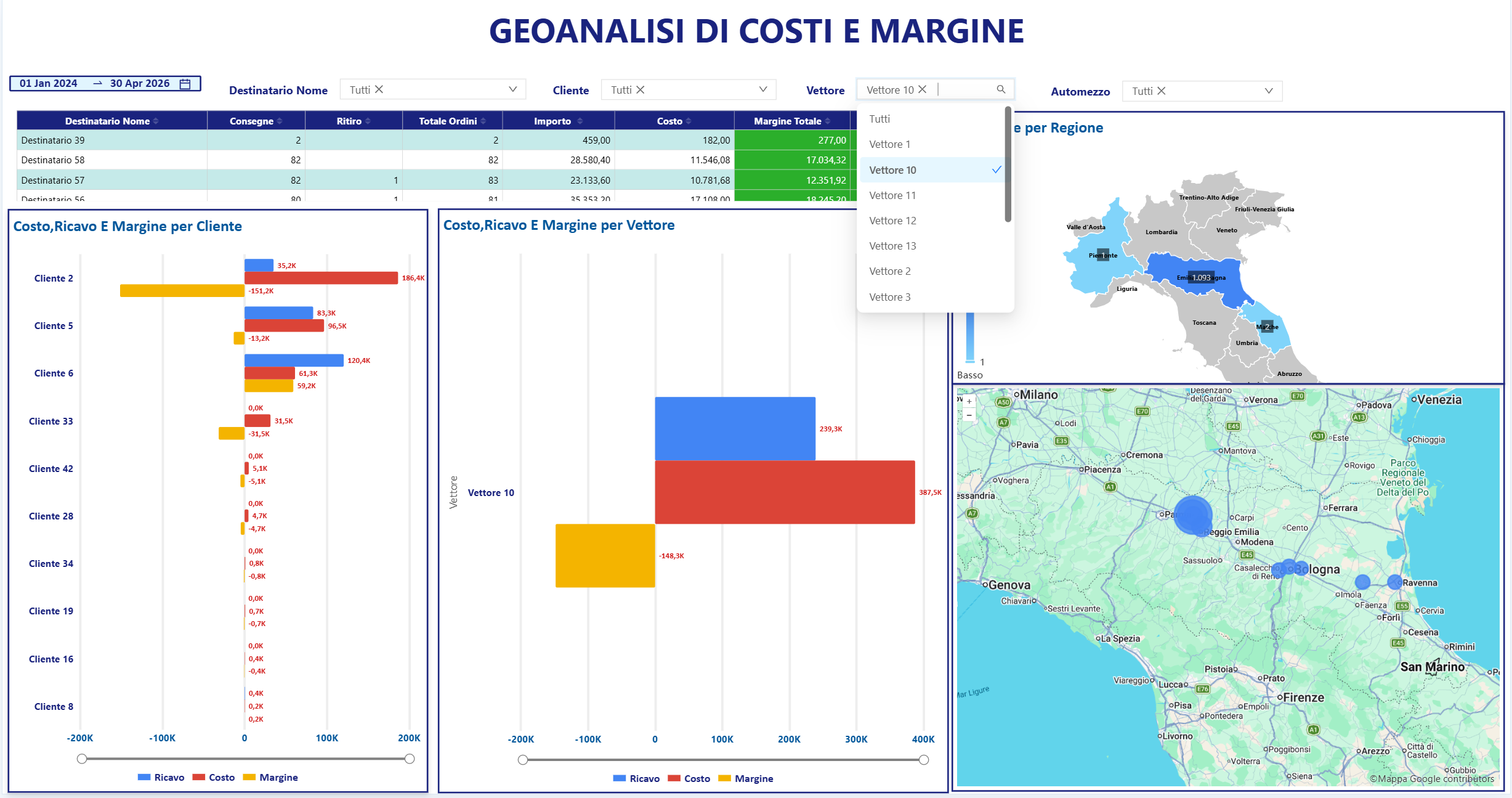
  • Which customer has the highest profitability?
  • What’s the saturation level of your vehicles?
  • How much stock has left a specific warehouse in the past 30 days?

And if your data isn’t yet integrated with your ERP or WMS? No problem.
You can start even with a simple Excel file. The data is recognized, organized, and made available right away.

Behind the platform is the expertise of GEP Informatica, a company that has spent years working inside warehouses and operational flows—not in labs.

Everything you see in B-AI Semplice comes from real needs, encountered in hundreds of projects.
It’s designed for people who make decisions every day—under pressure, with little time and a lot of responsibility.

That’s why the impact is immediate. Because you don’t have to wait months to see something that works.
You start right away, customize as you go, and above all, stop wasting time reinventing what already exists.

In logistics, complexity is inevitable. But analysis doesn’t have to be.

With B-AI Semplice, Business Intelligence is no longer a project to plan.
It’s an ally to use. Now.

Request a Demo

Filed Under: Trends & Innovation, Business Intelligence for SMEs Tagged With: SME, Business Intelligence, KPI, Transport, logistics

When logistics meets data intelligence

November 10, 2025 by Elisabetta Villa

Being a guest at a GEP Informatica webinar isn’t just about visibility.
It’s about meeting the people who, every day, deal with pallets, shipments, deadlines, and ever-tighter margins.

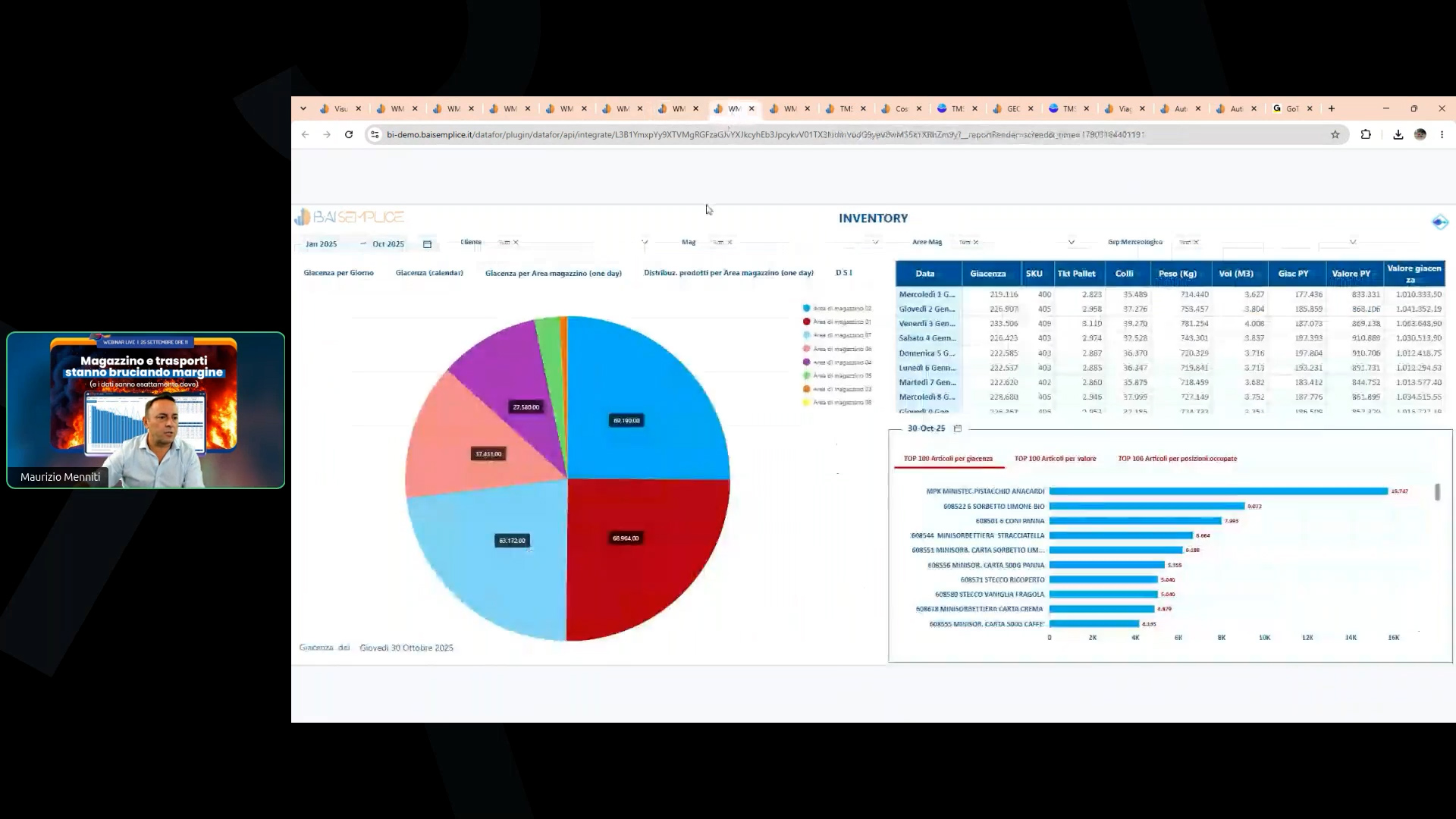
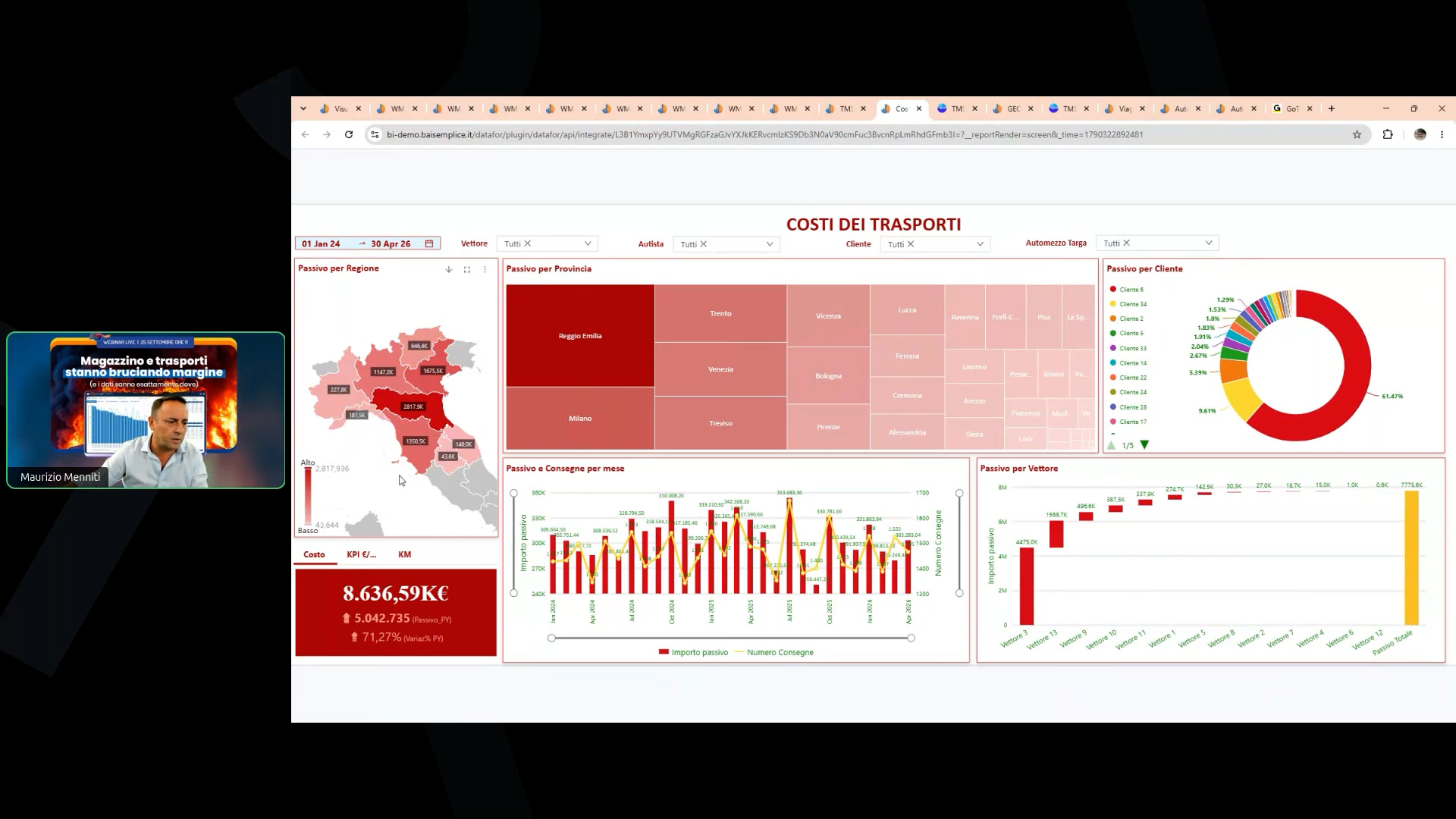
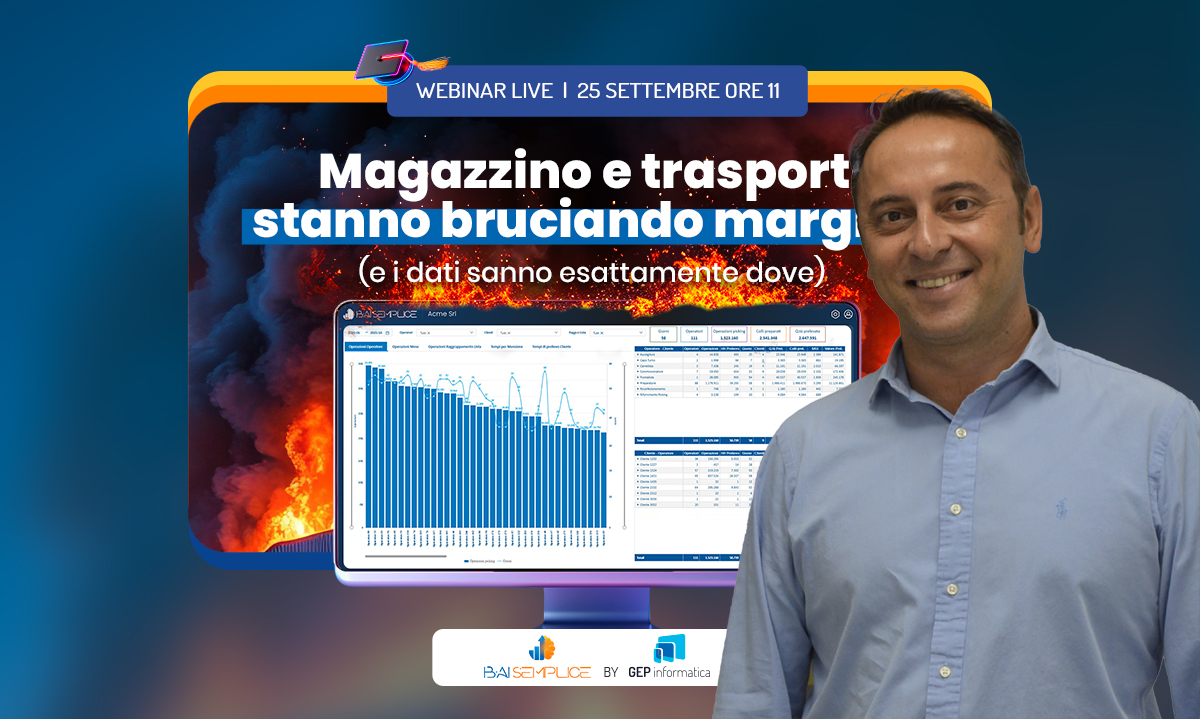
On November 7, we took part in the webinar dedicated to Business Intelligence and Artificial Intelligence for logistics — and the energy in the room confirmed that the sector is ready to take a real step forward.

Dozens of live questions, hundreds of participants, and almost total engagement.

Not because AI is trendy, but because everyone — from Logistics Managers to Transport Directors — is looking for practical answers: how to reduce overstock, anticipate transport delays, and identify where margins are being lost.

Optimize logistics with data

During the session, we showcased B-AI Semplice, the Business Intelligence platform built for those who live and breathe logistics.
You don’t need to speak the language of data — you just need to ask.
“Which customers have the lowest turnover?”
“Where am I spending the most on transport?”
The AI responds with clear, immediate graphs and dashboards — without even opening Excel.

This isn’t theory. It’s everyday practice.
It’s the difference between knowing something’s wrong and instantly knowing where to act.

That’s why we wanted to be there — because simplicity, in both data and processes, is our way of changing the rules of the game.

👉 Watch the full webinar below

Filed Under: Trends & Innovation, AI for Business, Uncategorized Tagged With: Business Intelligence, Transport, logistics

What you really need to do BI in a small or medium-sized business

August 4, 2025 by Elisabetta Villa

The scene is familiar: the company owner sits down with a consultant, and the first question is always the same: “Which software do you recommend for BI?”
But that’s the wrong question.
Because BI doesn’t start with technology—it starts with problems. And if you’re not clear on which decisions you want to improve, no software will save you.

Problems first, then data

In the world of logistics and transport, where every mistake translates into real costs, this is even more true.
What you need isn’t a fancy system that spits out reports—it’s a tool that immediately shows you where you’re losing money.

  • Where are we burning profitability?
  • Why are trips running under capacity?
  • Which carriers are slowing down deliveries?

If you can’t answer these questions today, BI can’t start tomorrow.

Those who design dashboards from behind a desk, without ever setting foot in a warehouse, risk building interfaces that look nice but are useless.

We’ve been inside warehouses—and we know KPIs aren’t Excel formulas, they’re real decision levers, every single day.

Cosa serve davvero per fare BI in una piccola o media impresa

Dashboards aren’t invented from scratch

Another classic mistake is starting from a blank page.
But in our sector, problems are often the same. Every company, large or small, needs to know how much it’s earning per route, how reliable a supplier is, how long a delivery takes.
That’s why our dashboards aren’t just “preconfigured”—they’ve been tested in the field.
Profitability by customer. Punctuality by carrier. Vehicle saturation. Load forecasts. Parcel turnover. Every metric comes from real cases.
The result? Shorter activation times. No endless consulting. Better decisions, right away.

The right data is already in your company

Many believe that doing BI requires tons of perfect, clean, fully integrated data.
Wrong.
SMEs already have the data. In the ERP, in the TMS, in transport documents, in Excel files. The problem isn’t quantity—it’s connecting what already exists.

Our approach doesn’t involve IT revolutions. It’s about smart connections, domain expertise, and dashboards that read data where it already lives.

We don’t ask the company to change—we make BI adapt to the way the company works.

BI isn’t just for tech teams

If only IT looks at the dashboards, you’ve wasted time and money.
BI must speak to decision-makers: management, logistics, administration. They’re the ones who should open a dashboard and instantly see what’s happening.
That’s why the best projects are born when we directly involve operational people. We run workshops. We ask how they work. We design tools tailored to them—without reinventing the wheel.
Because the truth is, many of the answers are already in plain sight. You just need a tool that brings them out.

Conclusion

Doing BI in an SME isn’t about replicating what large companies do—it’s about building a system that’s concrete, useful, and sustainable.
You need industry experience, not theory.
You need access to the data you already have, not impossible integrations.
You need to involve decision-makers, not just those who write SQL queries.
And you need to start with people who’ve already done this job.

With B-AI Semplice, we’ve turned years of experience in logistics and transport into a ready-to-use system. Not software to configure, but a management ally that speaks the language of business.
Because real BI isn’t about measuring everything. It’s about helping you understand what truly matters.

Filed Under: Business Intelligence for SMEs, Uncategorized Tagged With: SME, Business Intelligence, KPI

Distinguishing useful information from noise in business data

August 13, 2025 by Elisabetta Villa

📊 Have you ever felt like you had all the data… but no clear answers?
If you’ve ever opened a dashboard full of numbers and didn’t know where to start, you’re not alone.
SMEs today collect more data than ever. But where does the signal end and the noise begin?

First distinction: data, information, decision

A data point is just a raw number. Information emerges when you connect multiple data points. But real BI only begins when that information leads to a concrete decision.
And here’s the catch! Many companies generate reports—very few actually use them to act.

Noise has a thousand forms (and it’s very expensive)

📌 Duplicate data with different logic
📌 KPIs tracked out of habit but disconnected from business goals
📌 Indicators that are too detailed, confusing more than helping
📌 Misaligned sources that don’t communicate
According to Forrester, 73% of business data is never analyzed. But analyzing everything is also a mistake—what’s not useful is just noise.
And it’s not just a technical issue. As Kahneman said, noise is insidious: it undermines consistency and leads to variable, slow, or wrong decisions.

Want an example?

A logistics company sees in its reports that vehicle saturation looks good. But no one cross-checks that with profitability per route. The result? The fullest routes turn out to be the least profitable.

The data is there—but without context, it’s just noise.

Distinguere l’info utile nei dati aziendali

How do you distinguish what’s useful and what’s not?

Don’t start with the data—start with the questions:

  • What decision do we want to support?
  • What action can this indicator trigger?
  • Is it still relevant to how we operate today?

If a KPI doesn’t generate a choice, it’s not a KPI.

Also watch out for vanity metrics that make you look in control but add no value. A thousand registered users? More important is knowing how many reorder after the first purchase.

And remember—not all indicators are equal.
There are descriptive (what happened), diagnostic (why it happened), predictive (what will happen), and prescriptive (what should we do) metrics.
The most valuable? The last two. Always.

The role of BI is not to show everything, but to filter better

Good BI isn’t about drowning you in numbers. It’s about helping you answer a question in three clicks.
To do that, you need:

Distinguere l’info utile nei dati aziendali
  • KPIs selected based on roles
  • Visual summaries that don’t force endless zooming
  • Alerts that flag only real deviations
  • Automatic filters to hide what doesn’t matter

B-AI Semplice dashboards are built from real-world use cases already tested in the field. They filter out noise, highlight only what counts, and speak the language of SMEs..

In short?

You don’t need more BI. You need less noise and more clarity.
Because in a world full of numbers, the real advantage belongs to those who know where to look.

Filed Under: Business Intelligence for SMEs Tagged With: Business Intelligence, KPI

Five signs that show when you really need BI

August 19, 2025 by Elisabetta Villa

Many companies, both small and medium-sized, live with problems that could be solved in just a few clicks—but they don’t realize it. Or rather, they don’t realize it’s time to introduce Business Intelligence done right.
Often, BI is seen as a matter of technologies, licenses, or software. But the truth is, real BI solves practical problems: it saves time, prevents errors, and cuts costs.
So how do you know it’s time to take it seriously?
Here are five clear signals. If you recognize even just two, you’re already late.

1. Every department has different numbers for the same KPI

Logistics says one thing, administration says another. And maybe both are right—but based on different data.
This happens when information isn’t aligned. Too many files, too many versions, too much confusion.
The result? Nobody trusts the numbers anymore, meetings turn into Excel wars, and everything gets postponed.
If this has happened to you even once, you need BI.

2. It takes days to get a report

When you ask for a figure and someone says “I’ll get it to you tomorrow”, there’s a problem.

BI is meant to support real-time decisions, not generate tables on request. If information isn’t available when needed, it’s useless.

An updated dashboard every morning changes the way you work. You don’t need to be an analyst—just seeing immediately whether you’re above or below expectations is enough.

Cinque segnali che indicano quando serve una BI

3. Decisions are made on gut feeling

Phrases like:

  • “I think this client is profitable”
  • “It looks like the warehouse is full”
  • “We’ve always done it this way”

…are signs of an information gap.
Intuition matters, sure—but it must be validated with data. Otherwise, you’re flying blind.
BI doesn’t take away decision-making freedom—it strengthens it.

4. You don’t know why an indicator dropped

Profitability down 12%. But why?
If understanding it means asking sales for data, cross-checking with administration, and then matching it with logistics, something’s wrong.
You need BI that shows you what happened, where, with whom, and when—and ideally, why.
If you only understand after the fact, it’s already too late.

5. Excel has become a problem

Files too heavy, formulas breaking, sheets being overwritten.
If your company is still running on shared Excel files, the truth is you’re sitting on a time bomb.
BI doesn’t eliminate Excel—it goes beyond it. It gives you stable, shared tools, with controlled access and always-updated data.

Conclusion

If you recognized yourself in at least two of these signs, it’s the right time to introduce BI.
With B-AI Semplice, you can get started right away—without technological upheaval. We use the data you already have, speak your company’s language, and deliver ready-made dashboards that highlight what really matters.
No endless projects. What you need is clarity, simplicity, vision.
And the right BI can give you all of that—starting now.

Filed Under: Business Intelligence for SMEs, Uncategorized Tagged With: Business Intelligence, KPI, Transport, logistics

Bringing Business Intelligence into your company without disrupting processes

August 8, 2025 by Elisabetta Villa

Many SMEs believe that adopting BI means revolutionizing everything—changing software, rewriting processes, stopping operations.
It’s a common mistake.
Effective BI doesn’t impose change, it supports it. You don’t need to turn things upside down—you just need to see better.

Knowing when it’s time to start

There’s no such thing as a perfect moment, but there are clear signals that show BI is needed right away:

  • Every department has different numbers, and no one trusts the others
  • Reports arrive after the decisions are made
  • Meetings end with phrases like “let’s check again once we have the real data”

According to Gartner, over 70% of SMEs still work with manual reports—not by choice, but due to the lack of simple, accessible tools.

Using the systems you already have

Thinking that BI requires changing everything is the best way to never start.
The useful data is already there: in ERPs, in warehouse tracking, in transport documents.
It just needs to be organized—not recreated.

One logistics company activated a dashboard on cost per km and vehicle saturation. No new software, just a different way of reading the data. In three months, they cut costs by 12%.

Portare la Business Intelligence in azienda senza stravolgere i processi

Choose a tool that adapts to the company

IThe failure of many BI projects starts here: tools that are complicated, slow, and designed for companies too far removed from your reality.
A useful BI doesn’t need analysts. It must:

  • Grow with the company
  • Connect with the systems already in place
  • Show dashboards that anyone can understand at first glance

B-AI Semplice does exactly this. Ready-to-use dashboards, industry-specific, built on real problems. No blank sheets, no hundreds of hours of consulting.

Few KPIs, but the right ones

You don’t need to measure everything. You need to measure well. Some useful examples:

  • Profitability per customer
  • Transport punctuality
  • Vehicle saturation
  • Warehouse turnover

We spoke with a food company that told us they discovered 20% of their customers were generating losses. They changed strategy and improved profitability in six months—without touching revenue.rdita. Ha cambiato strategia e migliorato la marginalità in sei mesi, senza toccare il fatturato.

Conclusion

Bringing BI into your company doesn’t mean a technological revolution. It means looking more clearly at what’s already happening.
With B-AI Semplice, you don’t change processes—you change perspective.
You use the data you already have, in a smarter way. And you make faster, better, more useful decisions.
The difference isn’t the technology—it’s how you use it.

Filed Under: Business Intelligence for SMEs Tagged With: Business Intelligence, KPI, Transport, logistics

  • Page 1
  • Page 2
  • Go to Next Page »

Footer

B-AI SEMPLICE s.r.l.
Via Ardione, 10
42015 Correggio (RE) ITALY
Cod.Fisc. e P.IVA: 03091510358
Reg.Imp. di RE n. 3091510358
REA c/o CC.I.AA: RE 362605

  • Facebook
  • Instagram
  • LinkedIn
  • YouTube
  • Privacy Policy
  • Cookie Policy