


How Much Is It Costing Us?
Anyone who manages a warehouse or organizes transportation will eventually be asked the same question, whether during a meeting or in an email from management. How much is this customer, this route, or this department costing us? It sounds like a simple question, but providing an accurate figure is another matter entirely.
The data needed to answer it is already there, but it is scattered across different systems, each storing it in its own way. The WMS knows how many order lines and packages have been prepared for that customer, the TMS knows the trips and rates applied, and the ERP stores carrier invoices and working hours. But none of these systems was designed to connect all this information. So the answer ends up being built manually in an Excel spreadsheet, and while everyone waits, decisions rely on experience, just as they always have. By the time the figure is finally ready, the person who asked for it has often already had to make a decision without it.
The Webinar Where the Question Finally Found Its Numbers
We started the September 25 webinar with the question “How much is it costing us?” because behind it there are almost always other questions, less explicit but more uncomfortable. How much does each shipped order really cost? Which customers consume more resources than they generate? On which routes are margins being lost without anyone noticing?
In the first part, we explained why WMS, TMS, and ERP systems, despite recording everything, cannot answer these questions on their own. Each system knows one part of the story, but none of them tells the whole story.
In the second part, we opened B-AI Semplice and let the platform speak for itself. On screen, data from Excel, WMS, TMS, and ERP systems took shape as ready-to-use logistics and transportation KPIs, the same indicators that many managers still reconstruct manually every time someone asks for them.
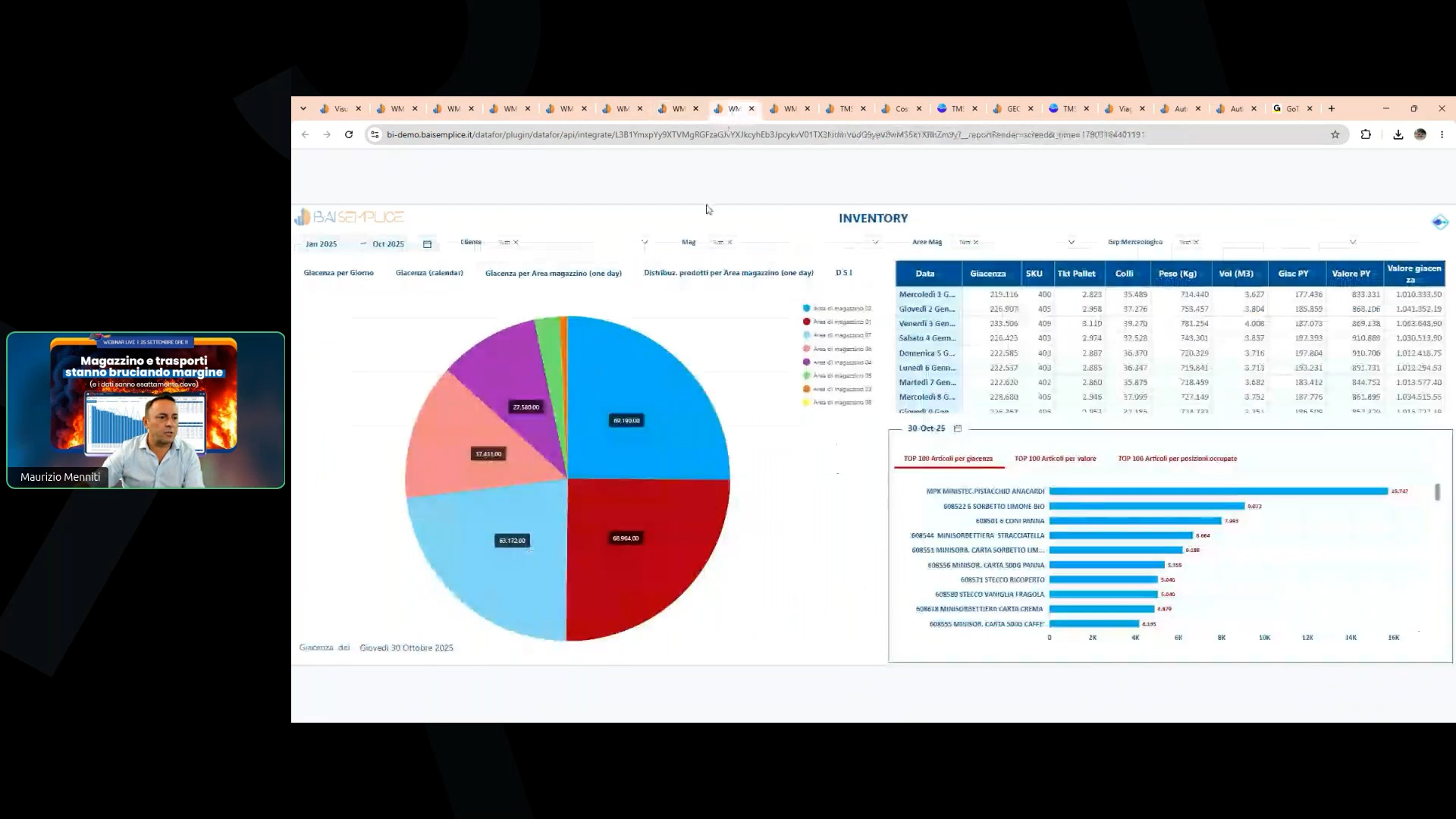
And that is where the difference becomes clear between an Excel spreadsheet that takes an entire afternoon to prepare and having the same information available exactly when it is needed.
There is another detail that changes the way we think about Business Intelligence. Getting started does not require launching a project that takes months before producing its first useful figure. B-AI Semplice already speaks the language of warehouse and transportation professionals and does not need to be built from scratch for every company.
The Cost of Time That No One Measures
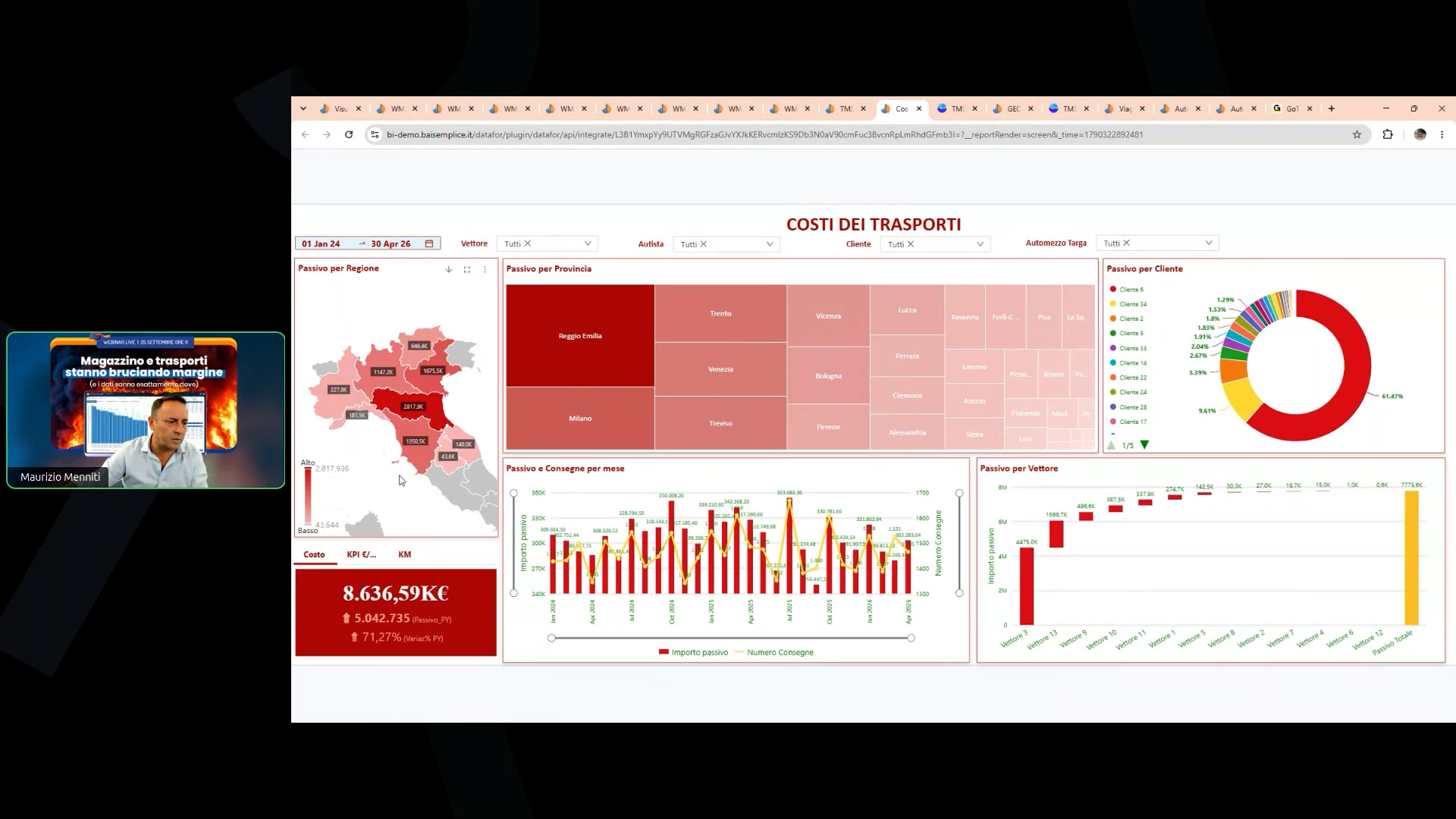
Every day that passes before an answer arrives has a cost that never appears in the reports. An increase in transportation costs discovered at the end of the month has already affected every shipment made in the meantime, day after day, with no opportunity to stop it.
The same increase identified as it is happening is still something you can act on, whether that means changing carriers, reviewing a delivery route, or renegotiating terms with a customer.
The question “How much is it costing us?” will always remain the same. What can change is when the answer arrives.
If You Missed the Webinar
You can find the full webinar recording below.
If I can give you one piece of advice, watch it while thinking about the last time someone asked you for a number and how long it took you to find it.